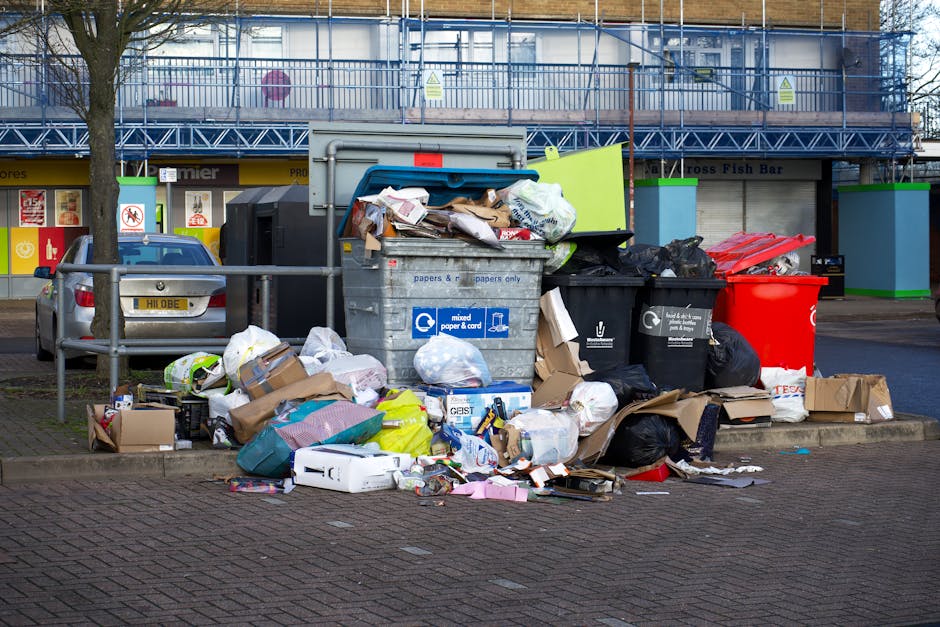
Woolwich Road rubbish removal options Abbey Wood: a practical guide to choosing the right service
If you are dealing with a pile of old furniture, builder's rubble, garden cuttings or a full home clear-out, the choice can feel surprisingly fiddly. Woolwich Road rubbish removal options Abbey Wood is not just about finding "someone to take it away". It is about picking the right method for the job, the access you have, the time you can spare, and how much mess you want left behind. To be fair, that last point matters more than people expect.
This guide walks through the main rubbish removal options available to households, landlords, tradespeople and local businesses around Abbey Wood. You will see when skip hire makes sense, when a grab lorry is better, when a man and van team is the neatest answer, and where permits, recycling and waste rules come into play. If you want a simple next step afterwards, the team behind rubbish removal services can help you narrow it down without overcomplicating things.
Table of Contents
- Why Woolwich Road rubbish removal options Abbey Wood Matters
- How Woolwich Road rubbish removal options Abbey Wood Works
- Key Benefits and Practical Advantages
- Who This Is For and When It Makes Sense
- Step-by-Step Guidance
- Expert Tips for Better Results
- Common Mistakes to Avoid
- Tools, Resources and Recommendations
- Law, Compliance, Standards, or Best Practice
- Options, Methods, or Comparison Table
- Case Study or Real-World Example
- Practical Checklist
- Conclusion
- Frequently Asked Questions
Why Woolwich Road rubbish removal options Abbey Wood Matters
Woolwich Road is a busy stretch for homes, rentals, small businesses and trade jobs, which means waste builds up in very ordinary ways: a kitchen refit, a garden tidy-up after a wet weekend, a garage that has quietly become a storage cave, or a commercial refit that has to happen between customers. If you choose the wrong removal method, you can waste money, block access, or end up with more stress than the rubbish itself deserves.
The local context matters too. Abbey Wood has a mix of tighter residential streets, driveways of different sizes, and properties where access is not always straightforward. That affects everything. A skip can be perfect one day and mildly awkward the next. A grab lorry may be a better fit if you have bulky material stacked at the front. A man and van service might be ideal if you want rapid, handled-for-you collection and no need to load a metal container outside.
Let's face it: most people do not wake up excited about waste logistics. They just want it gone, legally and without hassle. The right choice usually comes down to three things: volume, access, and urgency.
Expert summary: the best rubbish removal option in Abbey Wood is rarely the cheapest-looking one at first glance. It is the one that fits your access, waste type and timetable without creating avoidable extra charges.
How Woolwich Road rubbish removal options Abbey Wood Works
At a practical level, rubbish removal is a service that collects unwanted waste from your property and sends it for sorting, recycling, reuse or disposal. The process changes depending on the method you choose, but the aim is the same: clear the waste safely and efficiently, with the least disruption to your day.
1. Start with the type of waste
First, identify what you need removed. Household clutter, green waste, construction rubble, broken appliances and office furniture all behave differently. Mixed waste is common, but certain items need separate handling. For example, fridges, mattresses and confidential paperwork should not be treated as ordinary load-and-go rubbish.
2. Match the service to the access
Access can be the deciding factor. If a vehicle can park nearby and the waste is already bagged or stacked neatly, a grab lorry or man and van collection may be fast and tidy. If you are doing a larger project with ongoing waste over several days, a skip may be more practical. If the road space is tight, a wait and load skip hire arrangement can sometimes be the cleaner solution because the vehicle is loaded and moved on rather than staying outside for hours.
3. Check whether a permit is needed
If a skip has to go on a public road, a permit may be required. That is why people often look at skip permits and skip hire permits before booking. The exact need depends on the placement, not just the postcode. If the skip can sit fully on private land, the process is usually simpler.
4. Decide whether you need help loading
Some people only need the vehicle. Others need a crew to lift, carry and clear everything from inside the property. That is where services like man and van or full house clearance become useful. If you have a loft full of old boxes, a garage packed with forgotten bits, or a property that needs a respectful clear-out after a move, the hands-on approach can save a lot of back strain. And no, your spine does not need that heroism.
5. Waste is sorted and diverted where possible
A good provider will separate recyclable material from general waste where practical. That is why waste recycling services matter. Reuse, recycling and lawful disposal all play a part. It is not just a box-ticking exercise; it is how the best operators reduce landfill and keep the process efficient.
Key Benefits and Practical Advantages
Once you understand the main options, the benefits become much clearer. The real value is not only in "getting rid of rubbish". It is in making the job simpler, safer and less disruptive.
- Less clutter fast: Useful when a room, yard or driveway needs clearing before work can continue.
- Safer space: Removing loose waste reduces trip hazards and keeps access clear.
- Better project flow: Builders, decorators and landlords can keep a job moving without waste blocking the way.
- Cleaner presentation: Important for lettings, sales, shopfronts and customer-facing businesses.
- More predictable disposal: Proper collection reduces the temptation to make multiple awkward car trips.
- Improved recycling outcomes: Sorted waste is more likely to be recovered responsibly.
There is also a mental benefit, which sounds a bit soft until you are standing in a hallway full of bags and broken chairs. A clear space changes the way a property feels. You can hear it, almost. Fewer crunches underfoot, fewer things leaning in corners, less chaos in your peripheral vision.
If you are planning a larger clear-out, the broader services on the site can help you think beyond a single collection. For example, site clearance is often a better fit for heavier or more mixed waste, while builders waste removal can be more suitable for trades jobs than a general household collection.
Who This Is For and When It Makes Sense
This topic is not only for homeowners with a full shed. Woolwich Road rubbish removal options Abbey Wood can suit a wide mix of situations, and the right method changes with the job.
Homeowners and tenants
If you are clearing a loft, kitchen, spare room or garden after a long stretch of "I'll deal with that later", a household-friendly collection is often the simplest route. For smaller domestic projects, domestic skip hire can work well, especially if you are managing the loading yourself.
Landlords and letting agents
End-of-tenancy clearances often need speed, discretion and a sensible approach to mixed waste. Old furniture, bags of clothes, broken blinds and odds and ends can disappear in one hit if the collection is planned properly. For emptying a full flat or house, house clearance is often more efficient than piecing the job together item by item.
Builders and tradespeople
Renovation work creates heavy waste quickly. Rubble, timber offcuts, plasterboard and packaging need to be removed without slowing the job down. In those situations, builders skip hire or construction waste disposal is often the better fit than a one-off household collection.
Businesses and offices
If you are relocating, refurbishing or just clearing accumulated clutter, office clearance can help with desks, chairs, filing units and general office waste. For records and paperwork that must be handled carefully, confidential shredding is worth considering. Nobody wants old client files mixed in with takeaway boxes. That would be, frankly, a bit grim.
Gardeners and property owners
After cutting back hedges or clearing a neglected garden, green waste builds up quickly. garden waste removal is often easier than stuffing van after van with branches and soil.
Step-by-Step Guidance
Here is a straightforward way to choose the right rubbish removal method without overthinking it.
- List the waste type. Separate bulky household items, mixed junk, builder's waste, green waste and anything potentially hazardous.
- Estimate the volume. A few bin bags is very different from a room full of furniture or rubble. If the amount is uncertain, take a photo and compare it against the collection options.
- Check the access. Can a vehicle park close by? Is there a narrow passage, steps, or a front garden wall to think about?
- Decide who will load the waste. If you are happy to do the lifting, a skip may suit. If you want the team to take care of it, a man and van or clearance service may be smoother.
- Ask about restricted items. Some materials need special treatment. Look into hazardous waste disposal for items such as paint, chemicals or other tricky waste.
- Choose the time frame. If the clearance is urgent, see whether same day skip hire or a fast collection window is available.
- Check price and inclusions. Ask what is included, what could trigger extra cost, and whether collection, labour and disposal are all covered.
- Book with clear instructions. Give the provider access notes, parking details and any building restrictions before the day arrives.
If you are still weighing up which route suits you, the core service pages for skip hire and grab hire services are worth reviewing because they show the different strengths of each approach.
Expert Tips for Better Results
Here are a few practical things that make a real difference. Nothing flashy. Just the stuff that saves time and awkward phone calls.
- Sort as you go: Keep reusable items, recyclables and general waste apart where possible. It often makes loading easier and disposal cleaner.
- Break bulky items down: Flat-pack furniture, remove legs from tables, and collapse cardboard. It sounds minor, but it can dramatically improve what fits in one load.
- Keep a clear access route: A tidy path reduces lift time and lowers the chance of damage inside the property.
- Photograph the pile before booking: A few pictures help providers give a more accurate recommendation.
- Think about where the waste starts: If rubbish is spread across a loft, garden and garage, a general clearance can be more efficient than one container sitting outside.
- Match the service to the weight: Heavy rubble is not the same as bagged household rubbish. Grab lorries and builders skips tend to handle dense loads more effectively.
A quick local observation: in and around Abbey Wood, many waste jobs are not neat and tidy "one material only" projects. They are a mixture. A bit of this, a bit of that. That is normal. A good provider should be comfortable with mixed realities, not just perfect scenarios. Life is rarely perfect, after all.
Common Mistakes to Avoid
Most problems with rubbish removal come from assumptions. A little clarity at the start prevents a lot of fuss later.
- Booking too small a solution: Choosing the cheapest option without checking capacity often leads to extra trips or extra charges.
- Ignoring access restrictions: A vehicle may not be able to park where you expected. Narrow roads and limited waiting space can change everything.
- Forgetting permit needs: If a skip must sit on the road, check permit requirements early rather than on the morning of delivery.
- Mixing restricted items into general waste: Fridges, tyres, chemicals and similar items often need separate handling.
- Assuming all waste is the same: Heavy builders' waste and lightweight household clutter are processed differently.
- Leaving the clear-out until the last minute: Urgent bookings can be done, but planning ahead usually gives you more choice and fewer surprises.
One more thing. People sometimes forget to ask what happens after collection. Fair question. You should know whether items are reused, recycled or sent for disposal. If the provider cannot explain the process in plain English, that is usually a sign to keep looking.
Tools, Resources and Recommendations
You do not need a toolkit the size of a builder's yard, but a few simple aids make the job smoother.
- Heavy-duty bin bags: Handy for mixed household waste and soft materials.
- Gloves and sturdy footwear: Basic, but worth mentioning. Sharp edges and broken plaster are not forgiving.
- Measuring tape: Useful if you are deciding between skip sizes or checking whether a sofa will fit through a doorway.
- Camera phone: A quick photo of the waste pile helps with quoting and planning.
- Labels or separate piles: Useful for keeping recyclable items, general waste and items for donation apart.
For planning purposes, these pages can be especially helpful: skip sizes and prices if you are estimating capacity, what can go in a skip if you are unsure about acceptable materials, and recycling and sustainability if you care about the waste journey after collection.
If appliances are part of the job, fridge and appliance removal is a sensible dedicated option. For sofas and bulky bedroom items, mattress and sofa disposal can make life much easier than trying to squeeze them into a general load.
Law, Compliance, Standards, or Best Practice
Waste removal in the UK carries a duty of care, which in plain terms means waste should be handled, transported and disposed of properly. You do not need to become a compliance expert to book a collection, but you should expect professional handling, clear terms and lawful disposal routes.
For most customers, the practical points are these:
- Use a reputable carrier: Ask who will take the waste and how it is handled.
- Do not put prohibited items into general waste: Special items often need special treatment.
- Be honest about the load: If you describe rubble as "just a few bags", pricing and collection planning can get messy quickly.
- Check whether a permit is needed: Especially for road placements or public spaces.
- Keep paperwork where relevant: Commercial customers, landlords and contractors often need records for their own files.
Providers should also work safely, particularly where lifting, access, traffic or sharp materials are involved. If you want a sense of how a company thinks about these issues, pages like health and safety policy, insurance and safety, and payment and security can help build confidence before you book.
In short: good waste removal should feel organised, not improvised.
Options, Methods, or Comparison Table
There is no single best method for every Woolwich Road rubbish removal job. The right choice depends on how much waste you have, who will load it, and whether the road or driveway allows easy access.
| Option | Best for | Strengths | Things to watch |
|---|---|---|---|
| Skip hire | Renovations, decluttering, builder's waste | Good capacity, flexible loading, useful for ongoing jobs | May need a permit if placed on the road |
| Grab hire | Large loose piles, soil, rubble, mixed bulky waste | Fast loading, good for outdoor access, less manual handling | Needs enough space for the vehicle to reach the waste |
| Man and van | Household clear-outs, mixed items, quick removals | Hands-on service, tidy for smaller to medium jobs | May not suit very heavy or very large volumes as efficiently |
| Wait and load | Tight streets, quick clearances, no skip left behind | No long roadside placement, often ideal where access is tricky | You need the waste ready when the vehicle arrives |
| Specialist item removal | Appliances, mattresses, confidential waste | Better handling for awkward or regulated items | Usually not a catch-all solution for mixed loads |
For many Abbey Wood jobs, the best answer sits between categories. A small home clear-out might start as "just a few items" and end up being a mini house clearance. A garden tidy-up may become a mixed waste job once old fencing and broken pots appear. Happens all the time.
Case Study or Real-World Example
Picture a typical Friday afternoon on Woolwich Road. A couple has finished clearing a spare room, and the pile now includes a broken wardrobe, bags of clothing, old boxes, a microwave that stopped working months ago, and a few heavy bits from the shed. They also realise the front garden gate is narrow, so getting anything bulky through the house would be awkward.
A skip on the road would mean checking permit requirements and making sure there is space. A grab lorry would be ideal for outdoor rubble, but not always the neatest choice for indoor items. In this situation, a man and van clearance feels like the easiest fit: the team can remove items from inside, separate reusable pieces from general waste where possible, and clear everything in one visit.
Now swap the scene. Same street, but this time it is a builder finishing a kitchen renovation. There are plasterboard offcuts, tile waste, timber and packaging. In that case, builders waste removal or a dedicated skip is more practical. The waste is heavier, the turnaround matters, and the loading pattern is very different. Two jobs, same area, totally different solution. That is the real point.
Practical Checklist
Use this quick checklist before you book Woolwich Road rubbish removal options Abbey Wood.
- Have I identified the main waste type?
- Do I know roughly how much there is?
- Is the waste indoors, outdoors, or spread across both?
- Can a vehicle park close enough for efficient loading?
- Do I need help carrying items from inside the property?
- Are any items hazardous, confidential or specialist?
- Would a skip, grab lorry, man and van or wait and load be the best fit?
- Do I need to check permits for a roadside placement?
- Have I asked about recycling and disposal handling?
- Have I confirmed the collection time and any access notes?
If you can tick most of those boxes, you are already ahead of the game.
Get a free quote today and see how much you can save.
Conclusion
Woolwich Road rubbish removal options Abbey Wood come down to making a practical match between your waste, your space and your schedule. For some people that means a skip. For others it means grab hire, a man and van collection, or a more specialised clearance service. There is no prize for choosing the most complicated method.
The best result is the one that gets the job done cleanly, safely and without a lot of back-and-forth. If you are planning ahead, check access, think about waste type, and choose a service that suits the reality of the property rather than the ideal version in your head. That little bit of thought at the start usually saves a lot of hassle later.
And once the clutter is gone, the space feels bigger, calmer, easier to use. That is the bit people remember.
Frequently Asked Questions
What is the best rubbish removal option for Woolwich Road in Abbey Wood?
It depends on the waste type, volume and access. Skip hire works well for ongoing projects, grab hire suits larger outdoor piles, and man and van is often best for household clear-outs.
Do I need a permit for skip hire in Abbey Wood?
You may need a permit if the skip is placed on a public road. If it stays fully on private land, a permit is often not needed. It is sensible to check before booking.
Which option is best for heavy builders' waste?
Builders' waste removal, builders skip hire or construction waste disposal are usually better than a general household clearance when the load includes rubble, bricks or other heavy materials.
Can I get same-day rubbish removal?
Sometimes, yes. Same-day availability depends on vehicle schedules, the amount of waste and the type of collection needed. Urgent jobs are worth asking about early in the day.
What items cannot go into a skip?
Hazardous items and certain specialist materials often cannot go into a standard skip. If you are unsure, check the guidance on what can go in a skip and ask about separate handling for restricted waste.
Is grab hire better than skip hire?
Neither is universally better. Grab hire is often faster for loose piles and outdoor waste, while skip hire can be better for jobs where you want a container on site for several days.
Can a man and van service handle bulky furniture?
Yes, that is one of its main strengths. It is often a practical option for sofas, wardrobes, boxes and mixed household items that need lifting from inside the property.
What should I do with an old fridge or appliance?
Appliances are best handled through a dedicated fridge and appliance removal service because they can require specific treatment and safe collection.
How do I know which skip size to choose?
Start by estimating the waste volume and checking the skip sizes and prices guidance. If you are between sizes, it is usually safer to avoid choosing too small a container.
Is waste recycling included in removal services?
Responsible providers aim to sort and divert waste for recycling where possible. The exact process can vary, so it is reasonable to ask how your waste will be handled.
Can rubbish removal help with house clearances after a move?
Yes. House clearance is a common choice when you need to empty a property after moving, downsizing or dealing with accumulated items that have simply built up over time.
How do I prepare for a waste collection?
Separate obvious specialist items, clear access routes, take a photo of the waste, and give the provider any parking or entrance details. A little preparation goes a long way, honestly.